Loading...
Serving Galveston, TX and surrounding areas. (409) 497-0061
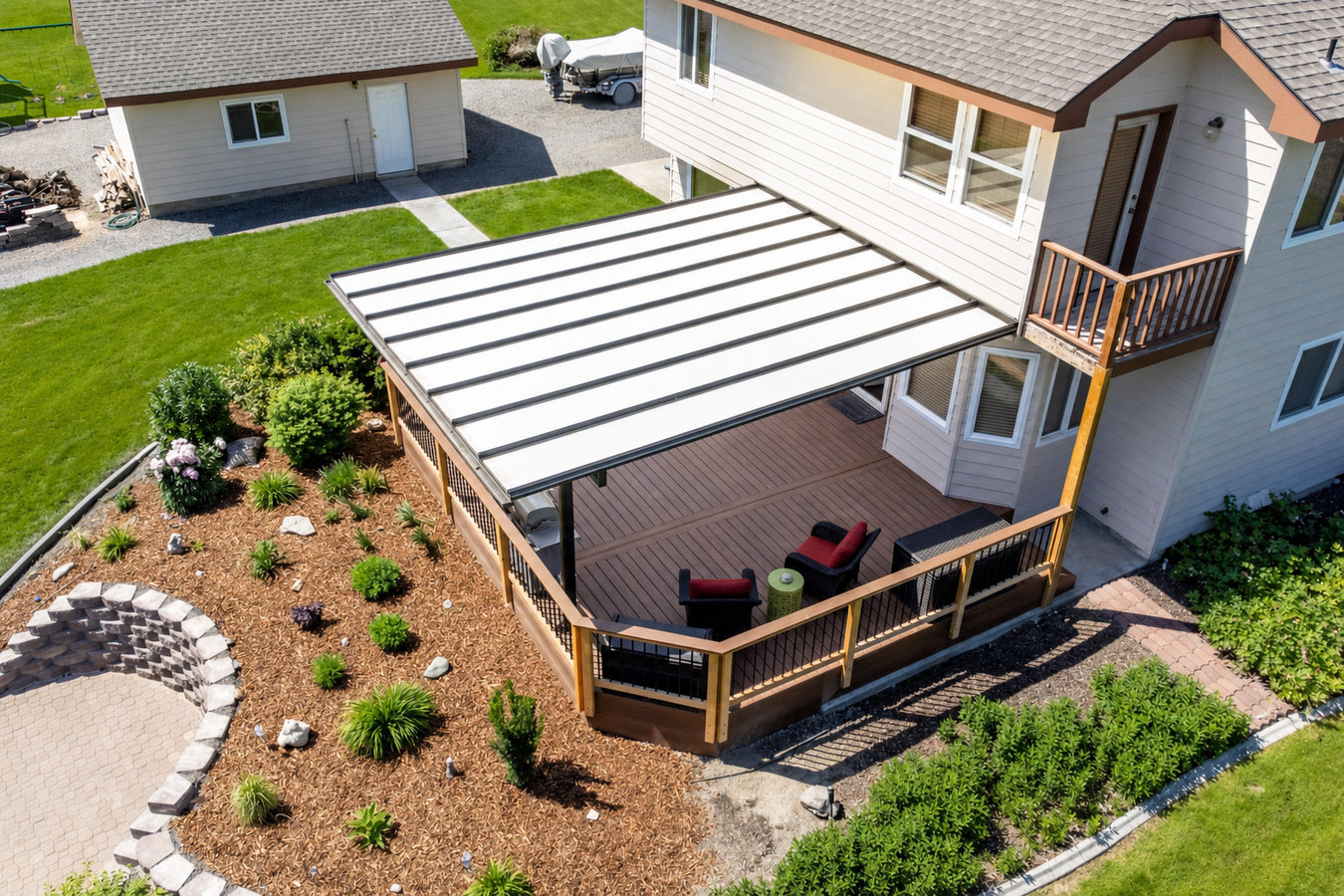
Galveston summers are long and the Gulf storms roll in fast. A properly built covered deck gives you outdoor space you can actually use - not just look at when the weather cooperates.
Covered decks and patio covers in Galveston add a permanent roof structure over your outdoor space - solid options block all rain and sun, while louvered or lattice designs filter light and give you shade - most attached patio cover projects take one to two weeks of construction once permits are approved.
In Galveston, an uncovered deck is up against intense summer heat, Gulf squalls, and salt air that accelerates wear on everything. If your current deck sits empty for most of the year because it is too hot, too bright, or too exposed to the elements, a covered structure changes that picture. You get outdoor space you can use - morning coffee, evening gatherings, and a place that stays dry when a Gulf shower rolls through.
If insect protection matters as much as shade, our screened-in porches and screened decks service combines a covered structure with mesh panels to block bugs entirely. Some homeowners want both - we can build that too.
If your patio or deck is basically unusable from May through September because it is too hot and too bright, that is the clearest sign a cover would change how you live in your home. Galveston summers are long and intense - a covered outdoor space can extend your usable season by months. If you only go outside after dark, a patio cover is worth a serious look.
Galveston gets significant rainfall year-round, and Gulf storms can roll in fast with little warning. If a passing shower consistently drives you inside and ends the evening early, a solid covered structure would let you stay outside through most rain events. This is one of the most common reasons Galveston homeowners make the investment.
If your deck boards are graying, cracking, or cupping - or you notice rust stains around the nail heads - the structure is taking a beating from the elements. Adding a cover significantly slows that kind of wear. Catching it before the decking needs to be replaced saves money in the long run.
If you have an older aluminum or wood patio cover and you can see rust streaks, sagging in the middle, or a gap opening up where it meets the house wall, those are signs the structure is failing. In Galveston's salt air environment, older covers deteriorate faster than they would in drier climates. A cover pulling away from the house is a safety issue before it is a cosmetic one.
We build attached patio covers that tie into your home's existing structure and freestanding covered deck platforms that stand independently in your yard. The right choice depends on your home's layout, your HOA guidelines if you have them, and whether you want the covered space connected directly to the house. Homes in Galveston's historic districts may have additional design guidelines - we know the review process and build designs that meet those requirements from the start. If you want the look of open-air coverage, a pergola installation is worth comparing side by side with a solid cover.
For homeowners who want complete insect protection alongside rain and sun coverage, combining a covered structure with a screen enclosure is a popular choice on the island. Our screened-in porches and screened decks service covers that version of the project. Every estimate starts with an on-site visit so we understand your specific home before recommending an approach.
Best for homeowners who want maximum rain and sun protection and a covered space that connects directly to the house.
Best for homeowners who want filtered shade and a more open feel - lets light and air through while cutting direct sun and some rain.
Best for homeowners whose yard layout or HOA guidelines make an attached structure difficult - the covered deck stands independently.
Best for homeowners who want both rain and sun protection and full insect control - the island standard for year-round outdoor living.
Galveston is one of the most wind-exposed residential areas in the continental United States. Any covered deck built here needs to be designed for the wind speeds that Gulf storms bring - heavier framing, more anchor points, and roofing materials that will not peel off in a gust. This is not an optional upgrade: a cover that fails in a tropical storm can damage your home and complicate your insurance claim. The Texas Windstorm Insurance Association (TWIA) has construction requirements for coastal properties, and permitted work is inspected against those standards. A significant portion of Galveston also falls within a designated flood zone, which affects how structures can be built - particularly for elevated homes that already sit on pier-and-beam or post-and-beam foundations. Homeowners in Kemah face the same wind and water exposure and benefit from the same coastal-spec approach.
Salt air is the other factor that separates Galveston projects from inland work. Standard wood screws and nails can rust through in just a few years here, and untreated lumber deteriorates faster than it looks. We specify stainless steel and hot-dipped galvanized fasteners and materials rated for coastal exposure as a baseline - not as an upgrade you have to ask for. Homeowners on the bay side in Texas City and nearby communities face the same salt air conditions, and we build every project there the same way. The difference in material quality shows up years later - or it does not, because we got it right the first time. City of Galveston Development Services can confirm permit and flood zone requirements for your specific address before you finalize any design.
We reply within one business day. Tell us the size of your space, whether you want a solid or open roof, and whether you have an existing structure - that is enough to schedule a site visit.
We come to your home, measure the space, check how the house is elevated, and note flood zone and HOA considerations before quoting anything. You get a written estimate with line items - not a ballpark you cannot compare to other bids.
Once you sign, we submit the permit application to the City of Galveston. Review typically takes one to three weeks - we handle the process and keep you updated so you are not waiting and wondering when the crew shows up.
The crew sets footings or post anchors, builds the overhead frame, and installs the roofing. Most projects run one to two weeks of active construction. After the city inspection passes, we do a final walkthrough and hand over a copy of the permit for your records.
No commitment required. We come to your home, measure the space, and give you a written quote.
(409) 497-0061Every covered deck we build on Galveston Island uses heavier framing, additional anchor points, and roofing materials rated for coastal wind exposure. That is not an upgrade - it is how we build here because we have seen what Gulf storms do to structures that were not designed for them. NADRA best practices inform our construction standards.
We use stainless steel and hot-dipped galvanized fasteners and specify pressure-treated or composite materials rated for salt air exposure. Two bids for the same project can look very different in price - often because one contractor is using materials that will rust through or rot within a few years in Galveston's environment. Ours will not.
We submit permits to the City of Galveston before any framing goes up and coordinate the final inspection. You receive a copy of the completed permit with your records - documentation that the structure was built to code. That protects you if you ever sell, file an insurance claim, or your HOA asks questions.
A large share of Galveston homes sit on elevated pier-and-beam or post-and-beam foundations. Building a covered deck on an elevated home is different from a slab-on-grade job - the framing tie-ins, the footing design, and the stair integration all change. We have done this work specifically on Galveston Island and our estimates reflect your home's actual conditions.
Building on a barrier island has its complications, and the difference between a contractor who knows this market and one who does not shows up years after the project is finished - in rust stains, in sagging framing, or in a structure that moves when it should not. We have been building here, and we are still here when you need us.
A pergola gives you overhead structure and shade with an open-air feel - a popular alternative when a solid roof is more coverage than you want.
Learn MoreCombine coverage with full insect protection - a screened enclosure blocks Galveston bugs while keeping the outdoor feel.
Learn MoreGalveston's build calendar fills fast in spring - call or request a free estimate today and lock in your project date.